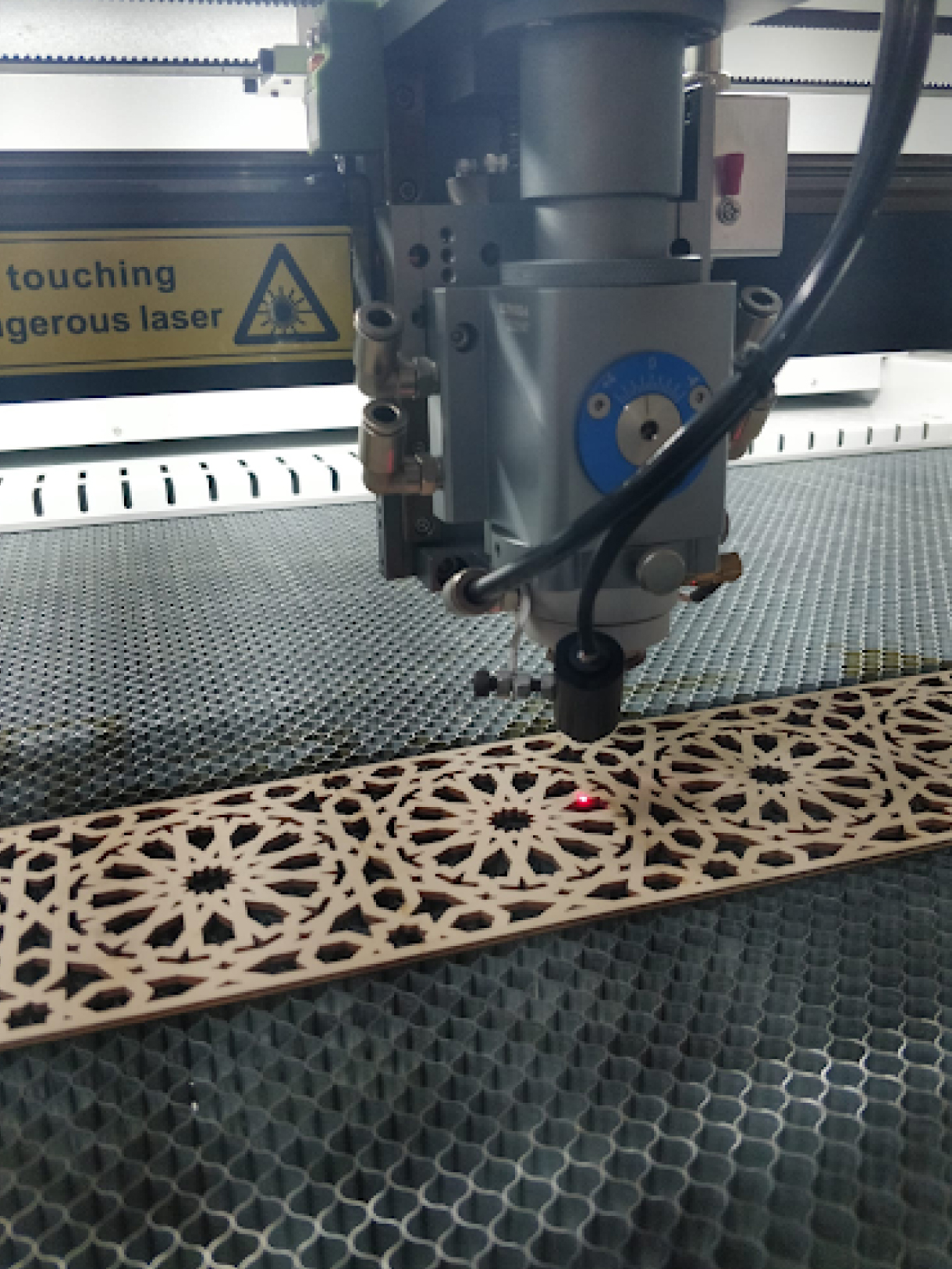
Laser technology was invented in 1960 by Theodore Maiman, but it would take until 1965 for the Western Electric Company to put into use the first CO2 production laser. This laser would be used to drill holes in diamond dies. 1965 also saw the first experiments with gas assisted laser technology.
The breakthrough of gas assisted laser technology changed the world by the late 1960's. In 1969, the Boeing Company concluded that laser technology could cut through hard materials. By the mid 1970's, these machines were being produced at a rapid rate.
Simultaneously experiments with Fibre laser technology were also taking place. It would take 20 more years before the first commercial devices using this technology would appear in the market. These machines weren't made widely available until the 2000's, but would form the basis of what we now know as 3D printing. Keep in mind that while Fibre machines are more expensive than CO2 machines, they are more precise.